
As more automakers move toward touchscreen-heavy interiors, one complaint keeps coming up from drivers: the disappearance of physical controls. Volume knobs, climate buttons, and other tactile switches are slowly becoming rare.
For many drivers, that's frustrating because physical controls can be adjusted without taking their eyes off the road.
Rivian is well aware of those concerns. Owners of the R1T and R1S have frequently asked for more traditional controls. However, instead of bringing back physical buttons for the upcoming Rivian R2, the company has taken a different route.
Its answer is something called the Haptic Halo system. Rather than filling the cabin with dedicated buttons and knobs, Rivian created multifunctional controls that can handle several tasks at once.
What Are Rivian's Haptic Halo Controls?
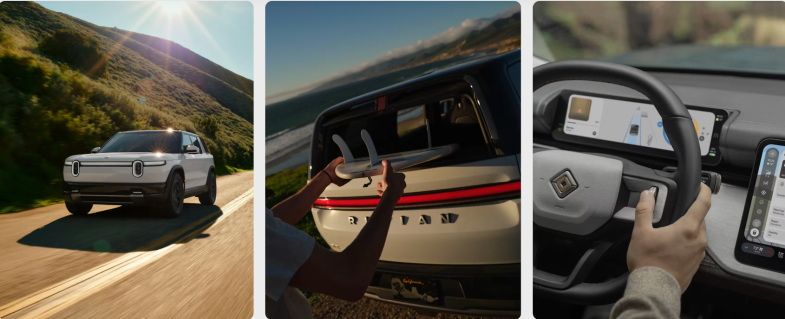
The Rivian R2 features two circular dials mounted directly on the steering wheel. These are known as the Haptic Halo controls.
At first glance, they look simple. In reality, they can perform several actions. Drivers can scroll, press, pull, and move them side to side to access different functions.
The left Halo is mostly dedicated to entertainment controls. Scrolling adjusts the volume. Moving left or right skips tracks. Pressing inward mutes the audio.
The right Halo handles vehicle-related settings. Drivers can change temperature settings by scrolling. Other directional movements allow users to cycle through various vehicle functions. Pulling the control toward the driver activates drive mode adjustments.
Rivian also added haptic resistance to the system. When drivers reach the upper or lower limits of a setting, the control provides feedback that mimics the feel of a traditional knob hitting its endpoint.
Why Rivian Settles With Haptic Controls
The decision fits Rivian's overall design philosophy. The company prefers clean, minimalist interiors with fewer physical components.
Traditional buttons require separate hardware, wiring, and manufacturing processes. By combining multiple functions into two controls, the carmaker can simplify production and reduce cabin clutter.
This is especially important for the Rivian R2. The vehicle is expected to be more affordable than the larger R1T pickup and R1S SUV. Simplifying the interior may help reduce costs while keeping the design modern and technology-focused.
Many EV manufacturers have adopted a similar approach. Large touchscreens and software-driven controls have become a defining feature of modern electric vehicles.
How the Haptic Halo System Feels in Daily Driving
For basic tasks, the system works surprisingly well. Adjusting volume feels intuitive after only a short period of use. The same goes for changing temperature settings.
The added haptic feedback helps drivers understand when they've reached the limits of an adjustment without needing to look at the screen. The extra feedback makes the controls feel more natural than many touch-sensitive systems currently on the market.
Still, the system is not perfect. Some users have noted that pressing inward to mute audio requires more force than expected. In some situations, drivers may accidentally change the volume instead of muting it.
Side-to-side gestures can also be inconsistent at times. A driver trying to skip a song could accidentally trigger a scrolling action instead.
These issues become more noticeable on rough roads, where steering wheel movement is less stable.
What's the Biggest Challenge?
The biggest hurdle for any haptic system is recreating the feel of a real button or knob.
A traditional volume knob provides instant physical feedback. Drivers know exactly how much they have turned it without needing to look away from traffic.
The Rivian volume control system attempts to recreate that experience through vibration and resistance. While it does a better job than many touch-based alternatives, it still doesn't fully match the precision and simplicity of a dedicated knob.
That's why many drivers continue to prefer traditional controls, especially for functions they use every day.
Future Vehicle Interiors Could Depend On It
The Rivian R2 Haptic Halo controls offer a glimpse into where vehicle interiors may be heading. Automakers are gradually relying on software to replace physical hardware. This allows them to reduce complexity and introduce new features through over-the-air updates.
For drivers who enjoy minimalist cabins and cutting-edge technology, the Haptic Halo system may feel like a smart evolution.
Others may see it as another step away from the simple, tactile controls they've relied on for decades.
Related Article: Paris Motor Show: Interesting Facts About the Oldest Auto Show in the World and Why it Still Matters Today
Copyright @ MOTORTIMES, All rights reserved. Do not reproduce without permission.
TRENDING NOW
![[RUMOR] New Tesla Model Y Juniper Refresh Leak Claim to be Coming From Factory](https://d.motortimes.com/en/full/1725128/rumor-new-tesla-model-y-juniper-refresh-leak-claim-coming-factory.webp?w=234&h=132&f=2fe2bb429ec232f7e8f0d9597139c9a0)
Electric Vehicle Longevity Study Shows Tesla Among Top Brands For 250,000-Mile Lifespan
By Jose Enrico Coronel


Koenigsegg One:1 Hypercar Returns to Auction as Ultra-Rare €10M Collector's Icon
By Jose Enrico Coronel

Nissan Z T-Top Revival Project Brings Classic Open-Air Design Back to Modern Sports Cars
By Jose Enrico Coronel


GALLERIES


