
Most of the automotive world's attention goes straight to the big names. These big car brands dominate highways, headlines, and history books.
But tucked away off the main road are unknown car brands, rare car manufacturers, and niche automotive companies that built something completely different. Some focused on raw performance.
Others chased innovation with limited resources. A few simply refused to play the mass-production game. The result is strange, brilliant, and often overlooked machines that still get talked about by enthusiasts today.
Here are five car brands you've probably never heard of, but definitely should.
Israel's Forgotten Sports Car Experiment
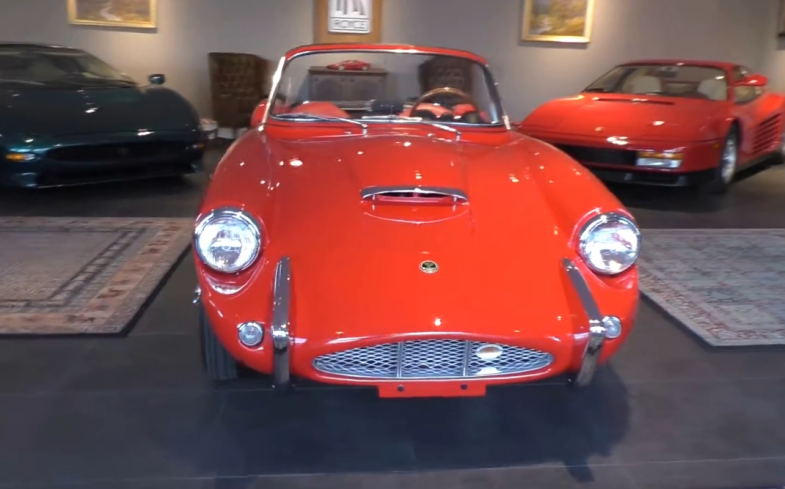
Sabra is one of those names that barely shows up in mainstream automotive conversations, yet its story is hard to ignore.
The name "Sabra" carries a double meaning. It refers both to someone born in Israel and the cactus, which also became the brand's badge. It was developed under Autocars Co. Ltd., Israel's first car manufacturer and still its only dedicated sports car maker.
The project started when Yitzhak Shubinsky acquired a fiberglass body design from British firm Ashley, paired with a chassis engineered by Leslie Bellamy. Later, a partnership with Reliant helped turn it into a production-ready sports car powered by a Ford 1.7-liter engine.
Only 379 units were ever built, with exports reaching markets like the United States and Belgium. Today, fewer than 100 cars are still traceable, making Sabra one of the more collectible entries among rare car brands.
Racing DNA Turned Into Road Machines
Panoz doesn't behave like a typical American car brand. It feels more like a racing project that accidentally started building road cars.
Founded in 1988 by Donald Panoz, the company began after acquiring an Irish racing chassis design. That foundation led to the Panoz Roadster in 1990, a car built around raw driving feel rather than refinement or comfort.
But the real identity of Panoz came from motorsport.
The brand became heavily involved in endurance racing, including Le Mans, and even created the American Le Mans Series. It also expanded into racing schools and track ownership.
Panoz is often mentioned among underrated car brands because of its early experimentation with hybrid concepts and its strong engineering-first philosophy. Performance always came before mass production.
Supercar Built Like a Puzzle
Ultima Sports takes a completely different approach compared to mainstream supercar brands.
Based in the United Kingdom, Ultima is best known for the Ultima GTR, a machine that gained attention for extreme acceleration performance, including a 0–100–0 mph time of just 9.4 seconds.
Instead of selling fully built cars worldwide, Ultima operates mainly as a kit car manufacturer outside the UK. Buyers often assemble the vehicle themselves, which allows a high level of customization rarely seen in modern supercars.
Most builds use Chevrolet small-block V8 engines, often tuned for extreme output and supplied by American Speed.
The newer Ultima RS pushes things even further, supporting engines that exceed 1,200 horsepower. Among unknown car brands, Ultima proves that world-class performance doesn't need a billion-dollar factory behind it.
Lightweight Chaos From the Netherlands
Donkervoort proves that speed doesn't always come from power. Instead, it can come from weight reduction taken to the extreme.
Founded in 1978 by Joop Donkervoort, the brand builds ultra-light sports cars inspired by the Lotus Seven philosophy. Everything about its cars is designed to feel raw, direct, and mechanical.
The modern Donkervoort F22 is a perfect example: around 1,600 lbs in weight, yet capable of 0–62 mph in roughly 2.5 seconds.
What separates Donkervoort from other rare performance car brands is its engineering independence, such as extreme lightweight construction focus, minimal driver aids for pure control, in-house carbon fiber technology (Ex-Core), and a track-level performance in road-legal form.
The D8 GTO even recorded Nürburgring performance benchmarks for street-legal cars, proving that simplicity can still compete with modern supercars.
Quiet Luxury With Aerospace Roots
Bristol Cars moves in the opposite direction from loud performance brands. The company prefers silence, understatement, and craftsmanship.
Originally founded in 1945, Bristol drew influence from Bristol Aeroplane Company engineering, giving its vehicles a refined and almost aircraft-inspired approach to design and build quality.
Even through financial struggles and restructuring, the brand continued operating in limited form, focusing on restoration and ultra-exclusive production.
Bristol cars are often described as "gentleman's express" vehicles. In short, these are luxury machines that don't need attention to feel special.
Attempts to revive the brand, including the Bristol Bullet prototype, have surfaced over the years, though production has remained extremely limited.
Unknown Car Brands Still Matter in Automotive Culture
These manufacturers may never compete with global giants in production numbers, but they did bigger and more different than other brands: freedom in design and engineering.
After all these years of being unnoticed, some of the classic cars they created may fetch millions of dollars in value. It's a must-hunt for every luxury car collector.
Copyright @ MOTORTIMES, All rights reserved. Do not reproduce without permission.
TRENDING NOW
![[RUMOR] New Tesla Model Y Juniper Refresh Leak Claim to be Coming From Factory](https://d.motortimes.com/en/full/1725128/rumor-new-tesla-model-y-juniper-refresh-leak-claim-coming-factory.webp?w=234&h=132&f=2fe2bb429ec232f7e8f0d9597139c9a0)
Electric Vehicle Longevity Study Shows Tesla Among Top Brands For 250,000-Mile Lifespan
By Jose Enrico Coronel


Koenigsegg One:1 Hypercar Returns to Auction as Ultra-Rare €10M Collector's Icon
By Jose Enrico Coronel

Nissan Z T-Top Revival Project Brings Classic Open-Air Design Back to Modern Sports Cars
By Jose Enrico Coronel


GALLERIES


